Using Retail Media to Distribute Offers Instead of Discounting Blind
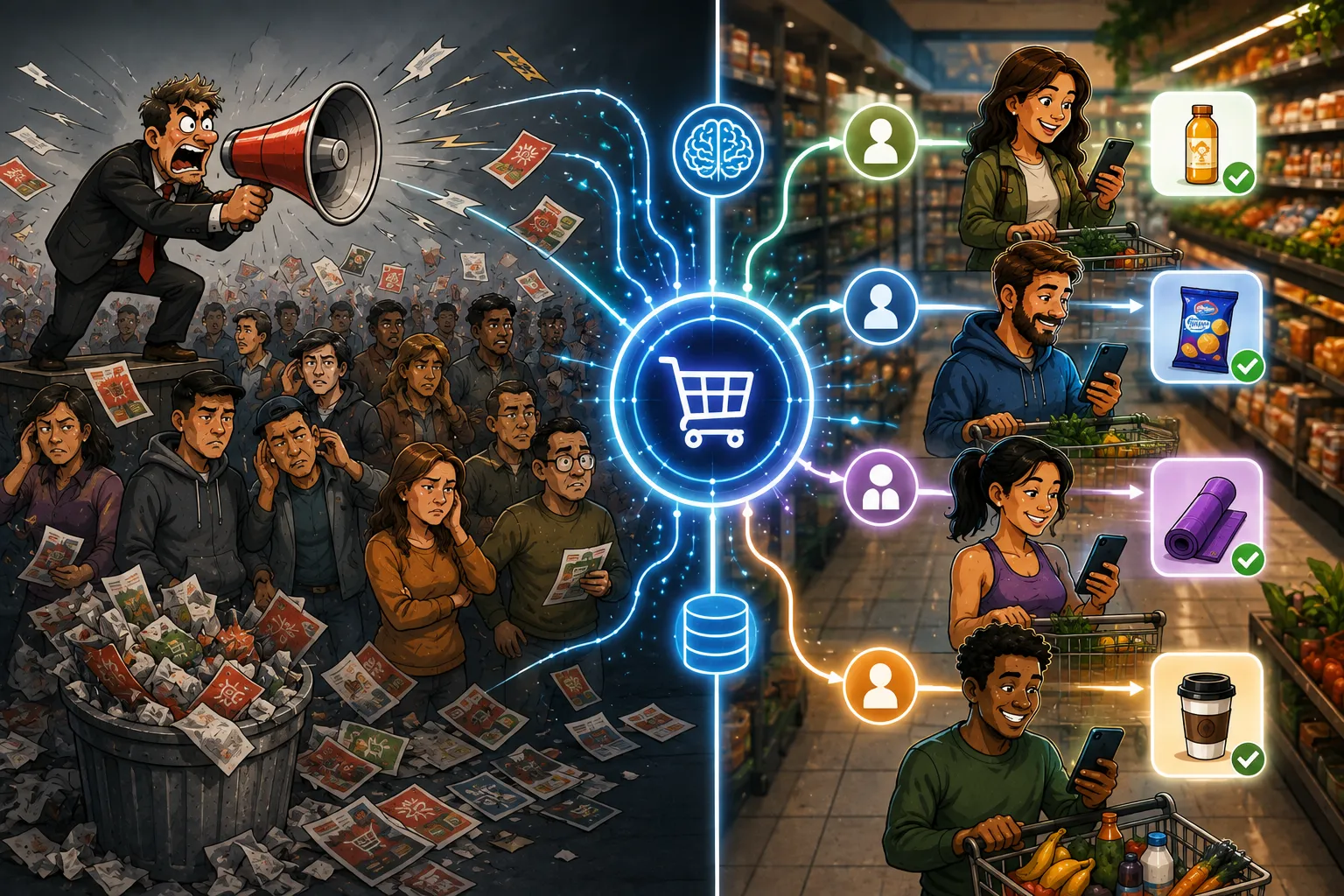
Retail Media as Offer Distribution: The Targeting Upgrade Mass Promotions Can't Match
MostCPG brands think about retail media as an advertising channel. Sponsoredproducts. Display banners. Video at the retailer. The goal is awareness andconsideration at the point of purchase — getting the shopper to notice thebrand and choose it over the competitor on the shelf.
That'sa legitimate use case. It's also half the story.
Retailmedia is also, for the brands that use it this way, the most precisely targetedpromotional offer distribution system that has ever existed for CPG. The sameinfrastructure that delivers a sponsored product impression to a shopper candeliver a personalized digital coupon to a lapsed buyer, a loyalty reward to ahigh-frequency buyer, or a trial offer to a competitive switcher — targeted atthe individual shopper level, based on actual purchase history, at the momentthey're making a category decision.
Thatcombination — precision targeting plus offer distribution in a singleactivation — is fundamentally different from anything CPG had access to fiveyears ago.
"Retail media networks with loyaltyinfrastructure can target promotional offers to individual shoppers based onpurchase history — precision that FSI coupons and mass digital offers cannotreplicate." — Kroger Precision Marketing
How it works in practice
Majorloyalty-based retail media networks — Kroger Precision Marketing, AlbertsonsMedia Collective, Roundel — can serve personalized digital offers through theirloyalty account infrastructure simultaneously with advertising impressions. Acampaign brief that specifies "reach lapsed buyers with a re-engagementoffer and competitive switchers with a trial mechanic" can be executed asa single activation where the targeting, the ad creative, and the offermechanics are all differentiated by segment.
Theshopper who is a lapsed buyer sees a sponsored product ad with a meaningfuldiscount offer attached. The shopper who is a competitive switcher sees asponsored product ad with a trial bundle offer. The loyal buyer sees asponsored product ad without an offer, or with a loyalty reward mechanic ratherthan a price discount. Same campaign. Three different offers. One media buy.
Thatdifferentiation is impossible with a mass promotional program and routine witha retail media platform that has segment-level targeting and offer managementinfrastructure.
The budget implication: blending media and promotional spend
Oneof the organizational frictions this creates: retail media budgets typicallylive in media, and promotional offer funding typically lives in trade. When asingle activation delivers both media impressions and targeted promotionaloffers, which budget pays for it?
Theanswer varies by organization, and there's no universal right answer. Somebrands are pooling media and trade budgets into a unified commerce budget atthe major retail accounts. Others are maintaining separate budgets with acoordination agreement that specifies which campaigns require joint funding.
Whatmatters is not which bucket the money comes from — it's that someone hasvisibility across both buckets when making activation decisions. A retail mediaoffer campaign funded entirely from media budget without trade team visibilitymisses the trade context that would make the offer design smarter. Apromotional campaign designed without retail media team input misses thetargeting precision that retail media infrastructure enables.
→ PersonalizedPromotions — agencyfiveeighty.com/personalized-promotions-vs-discounts
→ CommerceMedia — agencyfiveeighty.com/commerce-media
The measurement advantage
Retailmedia offer distribution has a measurement advantage over traditionalpromotional channels that most brands underutilize. Because the offer isdelivered through the loyalty platform and redeemed through the same system,the full shopper journey is trackable: who received the offer, who viewed it,who redeemed it, and what their subsequent purchase behavior looked like overthe following 90 days.
That90-day post-redemption view is the measurement that distinguishes a promotionthat builds loyalty from one that generates a one-time deal. A lapsed buyer whoreceives a re-engagement offer, redeems it, and makes three additionalpurchases in the following quarter at full price has a meaningfully differentROI profile than a lapsed buyer who redeems the offer and disappears. Retailmedia offer infrastructure surfaces that difference. Traditional masspromotional measurement cannot.
FiveEighty builds promotional offer campaigns through retail media infrastructurespecifically because the targeting, the distribution, and the measurement areall in one system — and a unified system produces better decisions than threedisconnected ones.