Physical Stores as Full-Funnel Media: How to Plan for It
Physical Stores as Full-Funnel Media: How to Plan for It
Thephysical store has been treated as a lower-funnel channel for as long as retailmarketing has existed. You get your product on the shelf. You run a promotion.The shopper buys. The funnel ends at the register.
Thatframing is too narrow for 2026. The store is not just where purchases happen.It is where category consideration happens, where new products get noticed,where brand associations get formed, and where the competitive set is evaluatedat close range. For shoppers who visit a grocery store twice a week, thatenvironment is the most repeated brand touchpoint in their lives.
Planningthe store as a full-funnel media environment - not just a conversion channel -changes what you invest in and how you measure it.
"Physical stores account for over 85% of CPG purchase volume in most grocery categories. Treating the store purely as a conversion environment means ignoring 85% of the most valuable brand touchpoint available." -- NielsenIQ
What full-funnel in-store media actually means
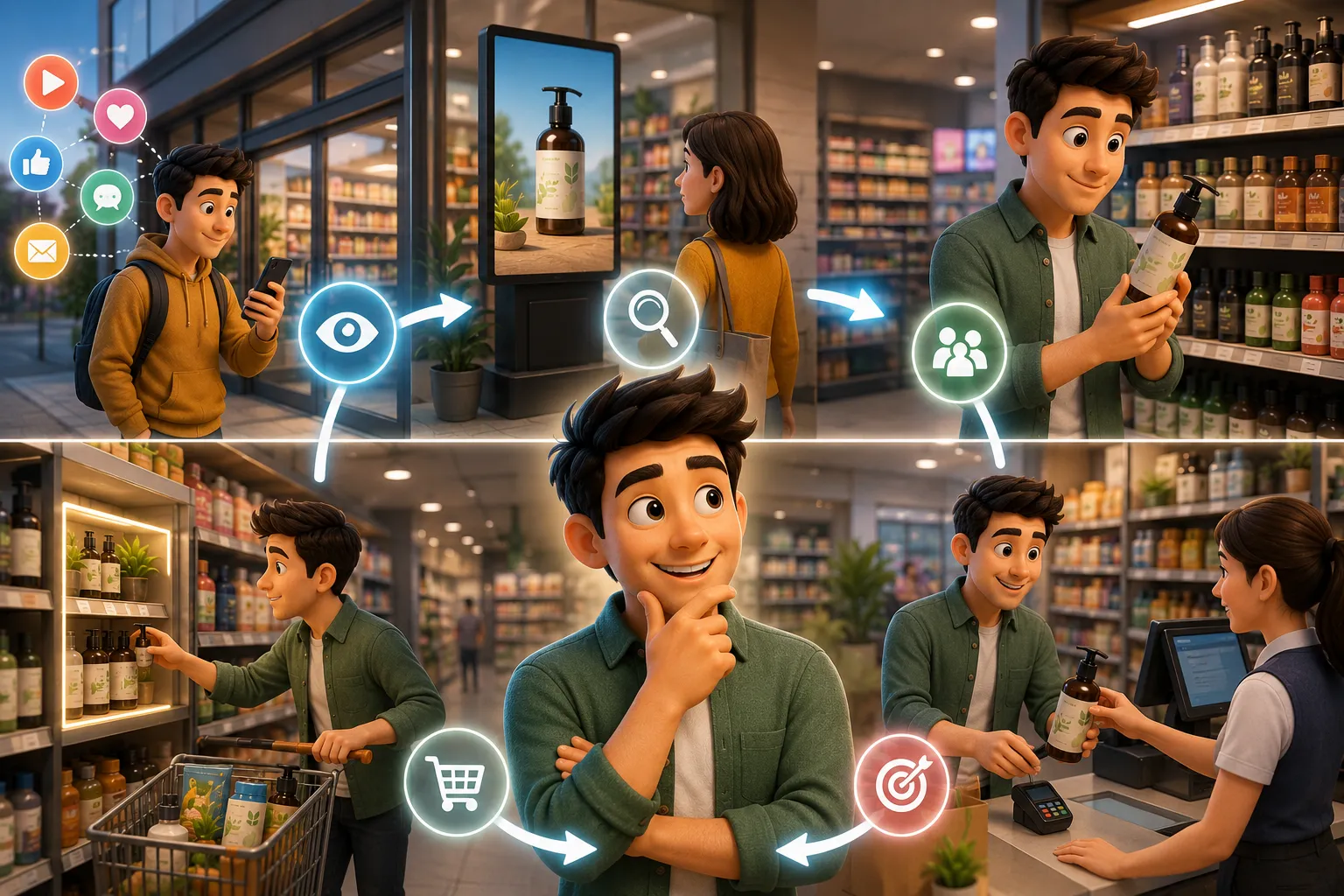
Full-funnelin-store media is not about putting more screens in the store. It is aboutdeliberately deploying in-store media assets at the moments in the shopperjourney where they can do the most specific work.
Awarenesslayer in-store: the store entrance, high-traffic lobby areas, and checkoutzones are where shoppers are most mentally available for brand messages thatare not yet tied to a specific category decision. Large-format displays,digital screens in these zones, and sampling programs that intercept shoppersbefore the category aisle are doing awareness work. The measurement is notconversion - it is brand recall and category consideration lift among shopperswho were exposed versus those who were not.
Considerationlayer: the category aisle is where the consideration decision happens. End-capdisplays, aisle violators, shelf talkers, and proximity digital screens arecommunicating with a shopper who has already decided to buy in the category andis now choosing between options. The message here should be comparative - whythis product over the others on the shelf - not brand awareness.
Conversionlayer: the product itself on the shelf is the final conversion moment.Packaging, shelf positioning, price signage, and any in-shelf digital displayare doing conversion work. The shopper has the product in hand. The job is toremove the last friction from the purchase decision.
The planning shift required
MostCPG in-store marketing is planned at the category level - what do we need inthe aisle to compete? Full-funnel in-store planning requires a view of thewhole store environment and a deliberate decision about where to invest at eachlayer.
Thatrequires a different conversation with the retailer. The traditional JBPconversation is primarily about aisle placement, feature and display support,and promotional mechanics. A full-funnel in-store conversation adds: what arethe retailer's awareness-level media placements in entrance and lobby zones,what are the measurement capabilities at each zone, and how can the brand'saisle investment be connected to awareness-level impressions earlier in thestore visit to create a coherent shopper journey rather than a singleconversion activation?
Retailerswho have invested in in-store media infrastructure - digital screen networks,proximity measurement, loyalty-linked exposure tracking - can support thisconversation. Those that have not are limited to the conversion layer bydefault.
-> In-StoreMedia Growth -- agencyfiveeighty.com/in-store-retail-media-growth-2026
-> CommerceMedia -- agencyfiveeighty.com/commerce-media
Measurement at each layer
Themeasurement framework for full-funnel in-store media has to match the objectiveat each layer - which means not trying to prove conversion ROI fromawareness-layer placements, and not accepting reach metrics as sufficientevidence for conversion-layer investment.
Awarenesslayer: brand consideration lift measured through loyalty panel research amongshoppers exposed to entrance and lobby placements versus matched controlshoppers. Category search lift on the retailer app in the periods followingawareness-layer campaigns. These are proxy measures rather than directattribution, and should be presented as such.
Considerationlayer: category conversion rate among shoppers exposed to end-cap or proximitymedia versus matched shoppers who were in the category without exposure. Thisis closer to the basket-lift measurement that the IAB framework supports.
Conversionlayer: direct sales velocity tracking at the product level. The simplestmeasurement, available from standard POS data without special methodology.
FiveEighty plans in-store media investment across all three layers - because astore that is only a conversion channel is a store that is half-planned.