Creators as a Retail Media Channel: How to Make It Work for CPG
Creators as a Retail Media Channel: How to Make It Work for CPG
Creatorpartnerships used to sit firmly in the brand marketing budget — awarenessplays, content production, social amplification. The ROI conversation wasvague. The connection to retail performance was theoretical at best.
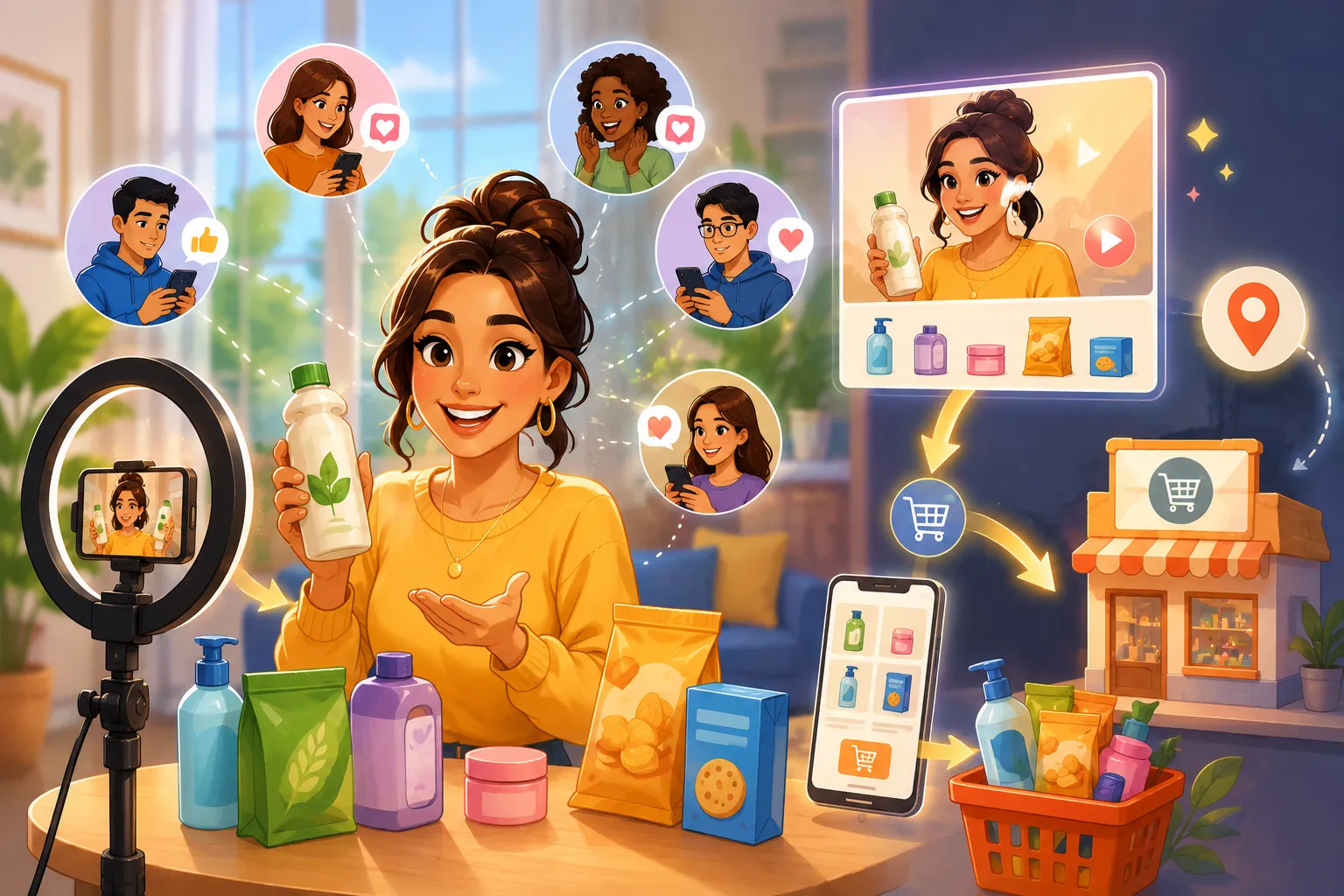
Thatseparation is collapsing. The infrastructure for connecting creator contentdirectly to purchase measurement — through retail media attribution, throughshoppable links, through creator-seeded retail media audiences — now exists atscale. And the brands that have wired creator programs into their commercestrategy are reporting performance that the siloed brand marketing model nevercould.
Here'swhat that connection actually looks like in practice.
"Unilever announced a 20x increase in influencer investment in 2025, citing measurable commerce outcomes as the primary justification." — Marketing Week
The three ways creator content connects to retail media
Theconnection between creator content and retail media performance isn'ttheoretical — it operates through three specific mechanisms that are eachmeasurable.
1. Creator content as audienceseed: creator followers who engage with brand content can be retargeted throughretail media networks using custom audience matching. A creator post thatgenerates 500,000 views and 30,000 meaningful engagements creates a warmaudience that retail media can then reach with purchase-intent messaging at themoment of category decision. The creator generates the awareness; retail mediacaptures the conversion.
2. Shoppable creator contentwith retail attribution: TikTok Shop, Instagram Shopping, and Amazon'saffiliate program all enable creator content to drive directly to purchase withattribution that connects the creator exposure to the transaction. For CPGbrands with DTC or marketplace presence, this creates a closed-loop measurementpath from creator post to purchase that didn't exist three years ago.
3. Creator content in retailmedia placements: Amazon's Inspire feed, Walmart's creator program, andemerging retail media creator integrations allow brand-licensed creator contentto run as retail media placements — in the ad format of the network but withthe authenticity and engagement quality of creator content. The best-performingretail media units at several major brands are now creator-originated assetsrepurposed for paid placement.
The CPG-specific challenges
CPGbrands face specific creator partnership challenges that DTC brands don't.Compliance requirements — claims substantiation, ingredient disclosure,regulatory language — add friction to creator content production that can makethe approval process slow enough to undermine the authentic, timely nature thatmakes creator content work in the first place.
Thebrands that manage this well build creator programs with pre-approved messagingframeworks rather than post-production review processes. The creator gets clearguidance on what can and cannot be claimed, what language is approved, and whatthe brand wants communicated — then has genuine creative latitude within thatframework. The review is front-loaded into the brief rather than back-loadedinto the approval cycle.
Distributioncomplexity is the second challenge. A CPG brand sells through fifteenretailers. Which creator content drives to which retailer? How do you avoiddriving traffic to Amazon when the priority retailer is Walmart? The brandswith the strongest creator-retail integration have explicit distributionstrategies in their creator briefs — specific retailers per creator partnership,specific links per placement, specific attribution parameters per retailchannel.
→ CommerceMedia — agencyfiveeighty.com/commerce-media
→ Creative& Content — agencyfiveeighty.com/creative-and-content
Measuring creator ROI in a commerce context
Themeasurement framework for creator programs connected to retail media is morerigorous than traditional influencer measurement — and more honest about whatcreator content can and can't prove.
Whatcreator-retail measurement can show: retail media lift in the periods followingcreator activation, search volume increase for the brand and category duringcreator campaign windows, attributed transactions through shoppable links, andaudience quality of retargeted creator followers vs. cold audience targeting.
Whatit can't show cleanly: the exact contribution of creator awareness to purchasedecisions that happen weeks later through a different channel. That attributiongap is real and shouldn't be papered over with vanity metrics. The brands withhonest creator measurement acknowledge the gap and build a mixed-methods case —quantitative where it's clean, directional where it isn't.
FiveEighty connects creator strategy to commerce measurement — because the creatorpartner who drives measurable retail lift is worth more than the one who drivesengagement that stops at the like button.