Short-Form Video for Commerce: Building the Shelf-to-Feed Bridge
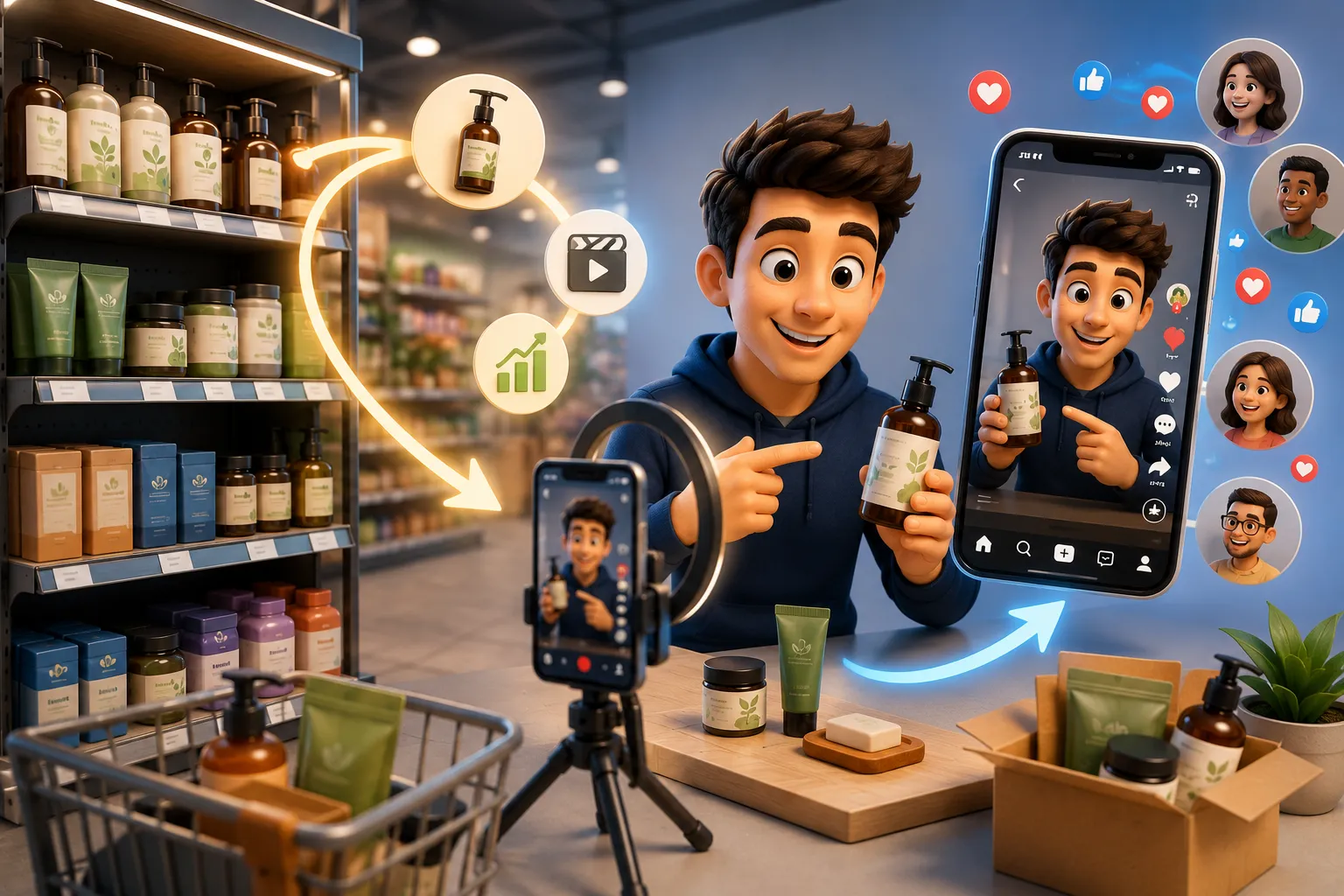
Short-Form Video for Commerce: Building the Shelf-to-Feed Bridge
Short-form video is the fastest-growing format in commerce media. TikTok Shop is executing billions of dollars in direct commerce annually. Amazon's Inspire feed is surfacing video-native product discovery at scale. Retail media networks from Walmart to Instacart are building short-form video placements into their ad product roadmaps.
The brands winning with short-form video in commerce are not the ones producing the most content. They're the ones that understand what the format actually requires — and it's fundamentally different from what works in brand television, social content, or retail media display.
Here's what the brief for short-form commerce video looks like when it's built correctly.
"Short-form video is now the primary discovery format for Gen Z and Millennial grocery shoppers, with 60%+ reporting they've purchased a product after seeing it in a short-form video." — TikTok for Business, 2026
What makes short-form video different from every other format
Short-form video in a commerce context is consumed by a person who did not choose to watch an ad. They're in a scroll — moving through content at speed, with their thumb making a continuous judgment about whether the next frame is worth the next second. Your video has roughly 1.5 seconds to earn a pause.
That constraint reshapes everything about the creative brief. Brand logos in the first two seconds don't earn a pause — they signal "ad" and accelerate the scroll. A compelling visual problem, an unexpected reveal, or a specific product demonstration that the shopper immediately recognizes as relevant to them earns the pause. Everything that follows has to justify the decision to stop.
The fundamental error in most short-form commerce video: treating it as a shorter version of a TV spot. The storytelling structure, the pacing, the role of the logo, the use of music — none of it translates directly. Short-form video requires a native brief, not an adaptation brief.
The commerce-specific brief for short-form video
A short-form commerce video brief has four components that a standard creative brief usually omits.
- Hook specification: what specifically happens in the first 1.5 seconds that earns a pause from a shopper who was actively scrolling past. This needs to be specific — not "compelling opening" but "product demo that shows the before-and-after in two seconds" or "hook question that the target shopper would stop to hear answered."
- Commerce signal: where and how does the product, price, and purchase signal appear? For commerce video, the product needs to be visible and identifiable early. The purchase pathway needs to be clear before the video ends. These aren't aesthetic choices — they're functional requirements for a format where the behavioral objective is "add to cart."
- Platform-specific adaptation: the same core content needs different execution for TikTok (native, lo-fi, creator-style tends to outperform polished), Reels (slightly more polished, product-forward), Amazon Inspire (product demonstration-heavy, benefit-explicit), and retail media video placements (shorter, more direct, CTA-prominent). One master video rarely works natively across all four.
- Sound-on vs. sound-off performance: most short-form video is consumed with sound off first. The video needs to communicate its core message without audio — which means text overlays, strong visual storytelling, and on-screen captions. Sound-on enhances; it doesn't carry.
→ Creator Retail Media — agencyfiveeighty.com/creator-retail-media-cpg
→ Design & Production — agencyfiveeighty.com/design-and-production
Measuring short-form video in a commerce context
Short-form video measurement in commerce requires a different metric hierarchy than awareness-focused video measurement. The standard video metrics — view rate, completion rate, reach — are necessary but insufficient. The metrics that tell you whether the video is doing commercial work:
- Add-to-cart rate from video-attributed traffic: does the traffic that comes from the video convert to cart adds at a rate that justifies the production cost?
- Search lift: does brand search volume increase in the periods following short-form video campaigns? A video that drives people to search for the brand is building commercial consideration, not just view counts.
- Retail media lift correlation: do retail media campaigns running simultaneously with short-form video show higher incremental lift than retail media campaigns running without video support? This correlation is the clearest signal that the video is generating purchase intent that retail media captures.
Five Eighty produces short-form commerce video with the measurement framework built into the brief — because a video that looks great in a view count report and does nothing for the shelf is not a commerce asset.