Shopper Proximity Targeting: Making Every Foot of Floor Space Work
Shopper Proximity Targeting: Making Every Foot of Floor Space Work
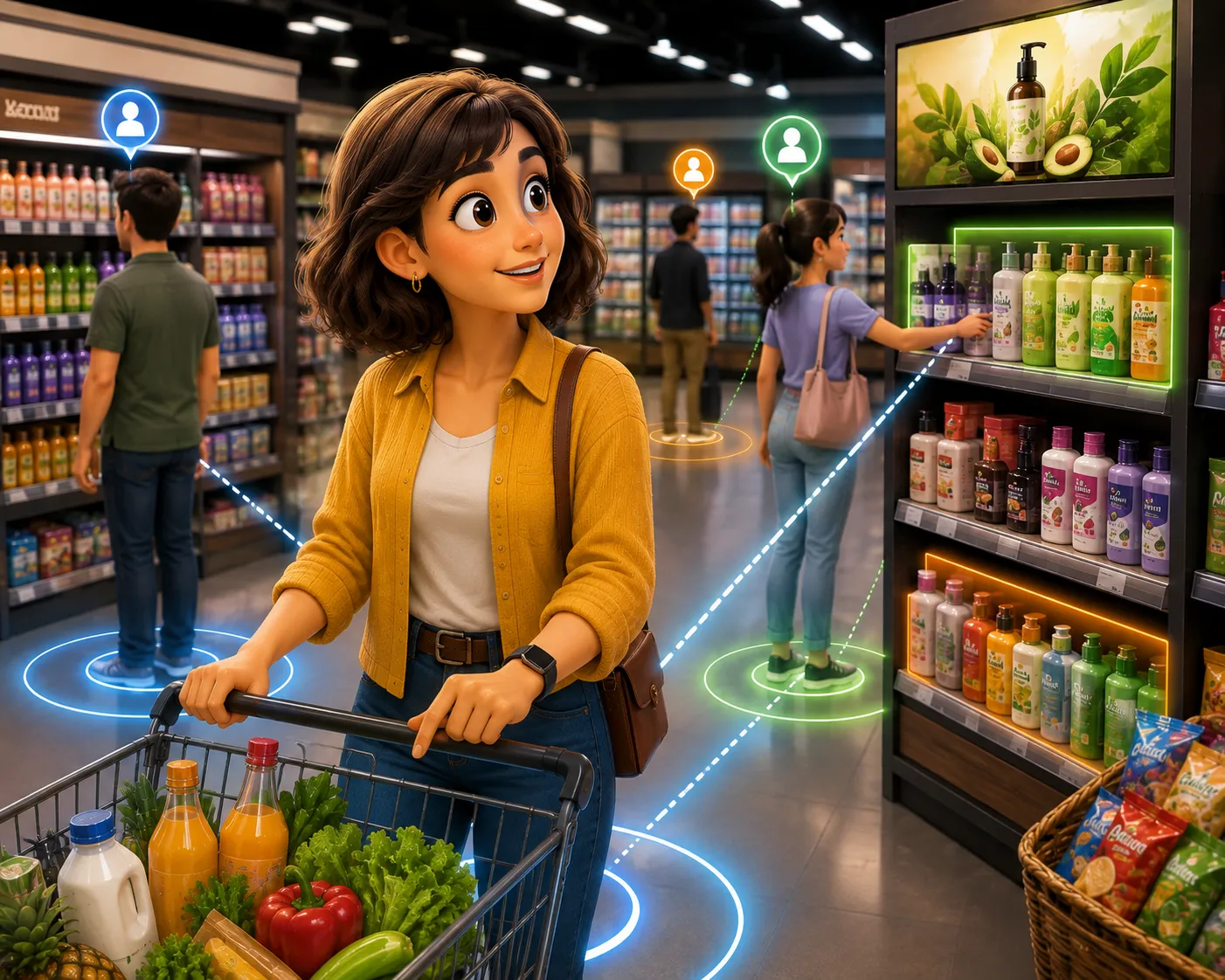
A shopper standing in the snack aisle is in a completely different decision state than a shopper who just entered the store, or a shopper standing at the checkout. Proximity targeting uses location signals from within the store - Bluetooth beacons, WiFi positioning, camera-based tracking, or app-derived location - to deliver media and messaging calibrated to where in the store the shopper is at the moment of delivery.
Done well, proximity targeting turns every foot of retail floor space into a distinct media environment with its own audience, its own behavioral context, and its own communication objective. Done poorly, it is shopper surveillance with an ad attached.
The difference between those two outcomes is almost entirely in how the brief is written and how the measurement is designed.
"Proximity-triggered in-store messaging generates 4-6x the conversion rate of non-triggered in-store media when the message is matched to the shopper's location context." -- Swiftly
The technology landscape
Proximity targeting in-store currently operates through three main technology layers, each with different precision, cost, and data implications.
App-based location: the most prevalent approach for retailers with strong app adoption. The retailer app, when open and in active use in-store, can identify where in the store the shopper is based on WiFi triangulation or aisle-level beacon signals. Messaging is delivered through the app - push notifications, in-app banner content, or offer activations - triggered by the shopper's position. The limitation: requires the shopper to have the app open while shopping, which is a meaningful adoption barrier in most grocery environments.
Beacon-triggered digital screens: in-store digital screen networks that activate specific content when a shopper with the retailer app passes within range of a Bluetooth beacon. The screen content changes based on the shopper's identity and location - serving a personalized message rather than a generic loop to a shopper who has opted into the experience. Higher precision than static screen placement, requires both screen infrastructure and beacon network.
Loyalty-linked post-visit attribution: less precise as a real-time targeting mechanism but more broadly available. Uses loyalty card scan data and store floor routing estimates to determine which sections of the store a shopper visited during a trip, then measures the relationship between section visits and subsequent purchase behavior. Valuable for planning which store zones to invest in even when real-time delivery is not feasible.
-> In-Store Digital Screens -- agencyfiveeighty.com/in-store-digital-screens-retail-media
-> Geo-Targeted Media -- agencyfiveeighty.com/geo-targeted-retail-media
The message brief for each store zone
The power of proximity targeting is that it lets you brief different messages for different store zones - not because the brand story changes, but because the shopper's decision state changes.
Store entrance and lobby: the shopper has just arrived. They have their list in mind, they are in planning mode, and they are most open to messages that help them organize the trip. Value messages, weekly specials highlights, and brand consideration content that puts your product on the mental list before the shopper reaches the category aisle are most effective here.
Category aisle: the shopper is evaluating. They are looking at options, comparing prices, picking up packages. Proximity messaging in this zone should be directly comparative - why this product over the alternatives visible on the shelf. Specific attribute communication, offer reminders, and social proof (review scores, bestseller callouts) do the most work here.
Adjacent categories: a shopper in the sports nutrition aisle is a natural proximity target for protein snacks in the adjacent aisle. Cross-category proximity messaging uses the behavioral signal of the current location to deliver a relevant adjacent recommendation. This is the highest-difficulty brief in proximity targeting and also the highest potential for basket size improvement.
The data and privacy considerations
Proximity targeting requires explicit shopper opt-in through the retailer loyalty program and app. The brands that position it as a benefit to the shopper - relevant offers, personalized recommendations, time savings - see higher opt-in rates than those that treat it as a data collection mechanism. The communication around proximity features in the retailer app should be shopper-benefit-forward.
The data implications for brands: proximity exposure data connected to purchase data creates a genuine closed-loop measurement pathway for in-store media. That data asset is valuable for planning future in-store investment. Understand the data ownership terms in any proximity media agreement before you commit - some networks own the exposure data outright and will not share it with the brand.
Five Eighty designs proximity targeting programs with the shopper benefit and the measurement value built in from the start - because in-store media that is genuinely useful to the shopper is the in-store media that earns repeated opt-in and generates the most durable data.