Digital Screens at Shelf: What Works and What Is Just Noise
Digital Screens at Shelf: What Works and What Is Just Noise
Walkthrough any major grocery chain right now and you will find digital screenseverywhere. End-caps with video loops. Shelf-edge displays with dynamicpricing. Checkout lane screens running brand spots. Freezer door screens thatactivate when a shopper approaches.
Someof these are generating measurable basket lift and genuine brand considerationimprovement. Others are expensive technology deployed because the retailerneeded to show innovation and the brand needed to spend their co-op budgetsomewhere visible. The difference between the two is not the screen - it iseverything around the screen.
Hereis how to tell whether an in-store digital screen placement is doing real workor just occupying real estate.
"In-store digital screen placements with high dwell-time and proximity-triggered activation generate 2-3x the basket lift of static end-cap displays in the same location." -- NielsenIQ Shopper Intelligence
The variables that determine whether a screen actually works
Locationis the most important variable. A digital screen in a high-traffic main aisleat eye level, positioned within three feet of the product being advertised, ina section where shoppers habitually slow down because of category complexity -that screen is positioned to influence the purchase decision. A digital screenon a secondary aisle header twenty feet from the product, in a zone whereshoppers are moving at pace rather than browsing - that screen is generatingimpressions without influencing decisions.
Theproximity principle: in-store media effectiveness drops significantly as thedistance from the product increases. The screen that is right next to theproduct communicates value and drives trial at a rate that the screen at theend of the aisle cannot match. When evaluating in-store digital screenplacements, distance to product is the first variable to assess.
Dwelltime is the second. Categories where shoppers spend more time evaluatingoptions - wine, specialty cheese, vitamins and supplements, skincare - generatemore dwell time in front of screens, which means more opportunity for themessage to register. High-velocity, habitual categories where shoppers reachfor the familiar without evaluation - commodity staples, basic paper goods -generate less dwell time and less screen effectiveness.
Content that works on in-store screens vs. content that does not
Thecontent brief for an in-store digital screen is different from every othercommerce media format in one critical way: the shopper is already in thepurchase environment. They are not being moved from awareness to consideration- they are already at the consideration or conversion stage. The content shouldmatch that stage.
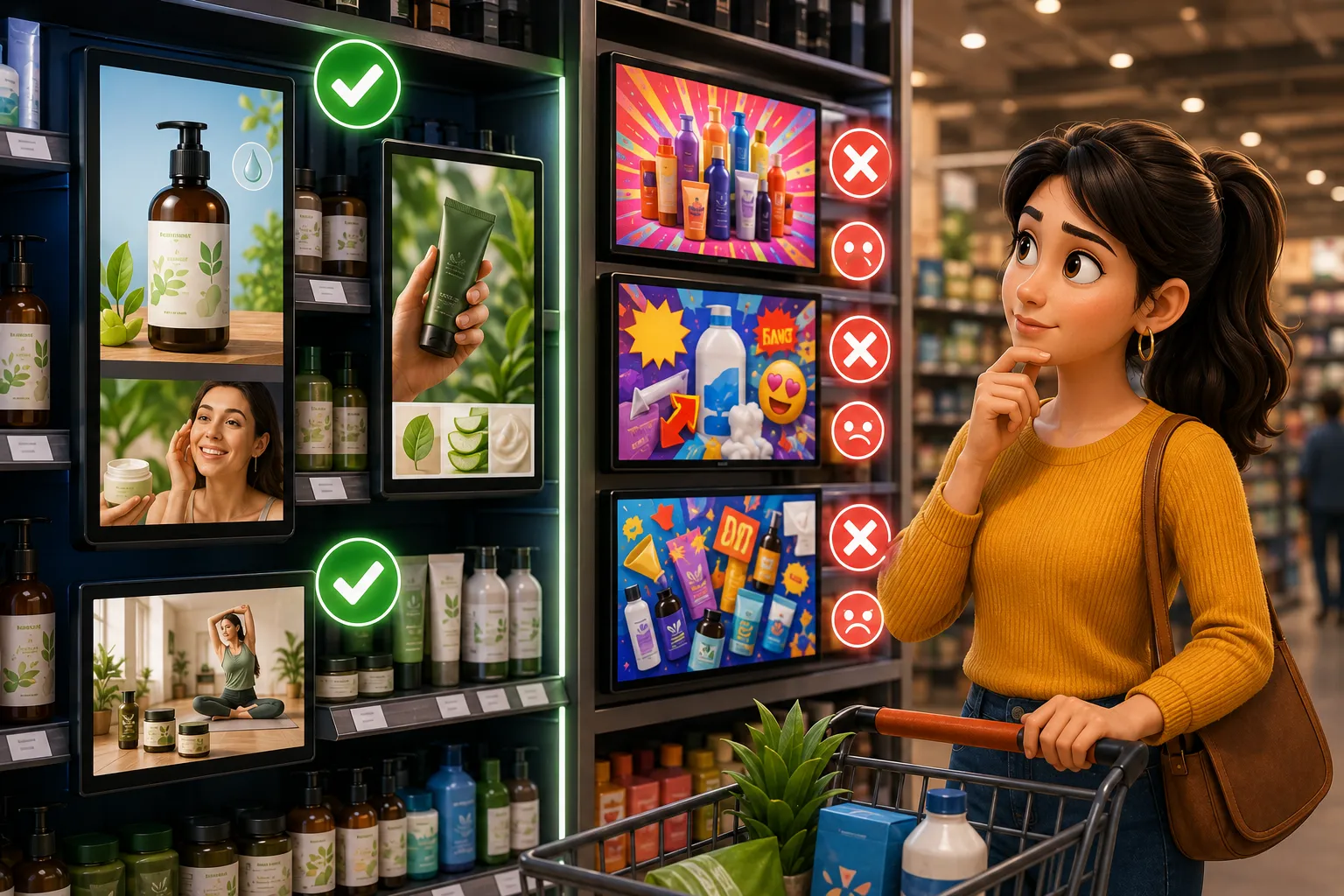
Whatworks: specific product benefit communication that answers the question theshopper is trying to resolve. Comparison content that makes the decisionbetween products easier. Usage occasion content that helps the shoppervisualize why this product is right for them today. Price and valuecommunication that removes the value-for-money objection.
Whatdoes not work: brand awareness messaging designed for TV that has beenrepurposed for an in-store screen. Lifestyle imagery that communicatesaspiration without communicating relevance to the specific purchase decision.Motion-heavy content that attracts attention without communicating anythinguseful about the product.
-> In-StoreFull-Funnel Media -- agencyfiveeighty.com/in-store-media-full-funnel
-> Designand Production -- agencyfiveeighty.com/design-and-production
Measurement that separates working screens from noise
Mostin-store digital screen measurement relies on impression counts - how manyshoppers passed the screen during the campaign period. That is a reach metric,not an effectiveness metric. A screen that generates 50,000 impressions andzero detectable lift in category conversion or brand sales velocity is notworking. It is expensive wallpaper with a viewership report attached.
Themeasurement that distinguishes working screens from noise: basket lift amongshoppers who were near the screen (defined by loyalty card data and in-storerouting) versus matched shoppers who were in the store but did not pass thescreen. If the network cannot support this measurement, you are buying reachwithout evidence of effect.
Askany retail media network selling in-store digital screen placements threequestions before you commit: what is the methodology for exposure measurement,what is the control group construction for lift measurement, and can you sharea case study that shows the methodology rather than just the outcome. Theanswers sort networks into ones with real measurement infrastructure and onesselling impressions with a lift story attached.
FiveEighty evaluates in-store digital screen placements against the measurementstandard before recommending them - because a screen that cannot be proven towork is a screen that should not be in the plan.