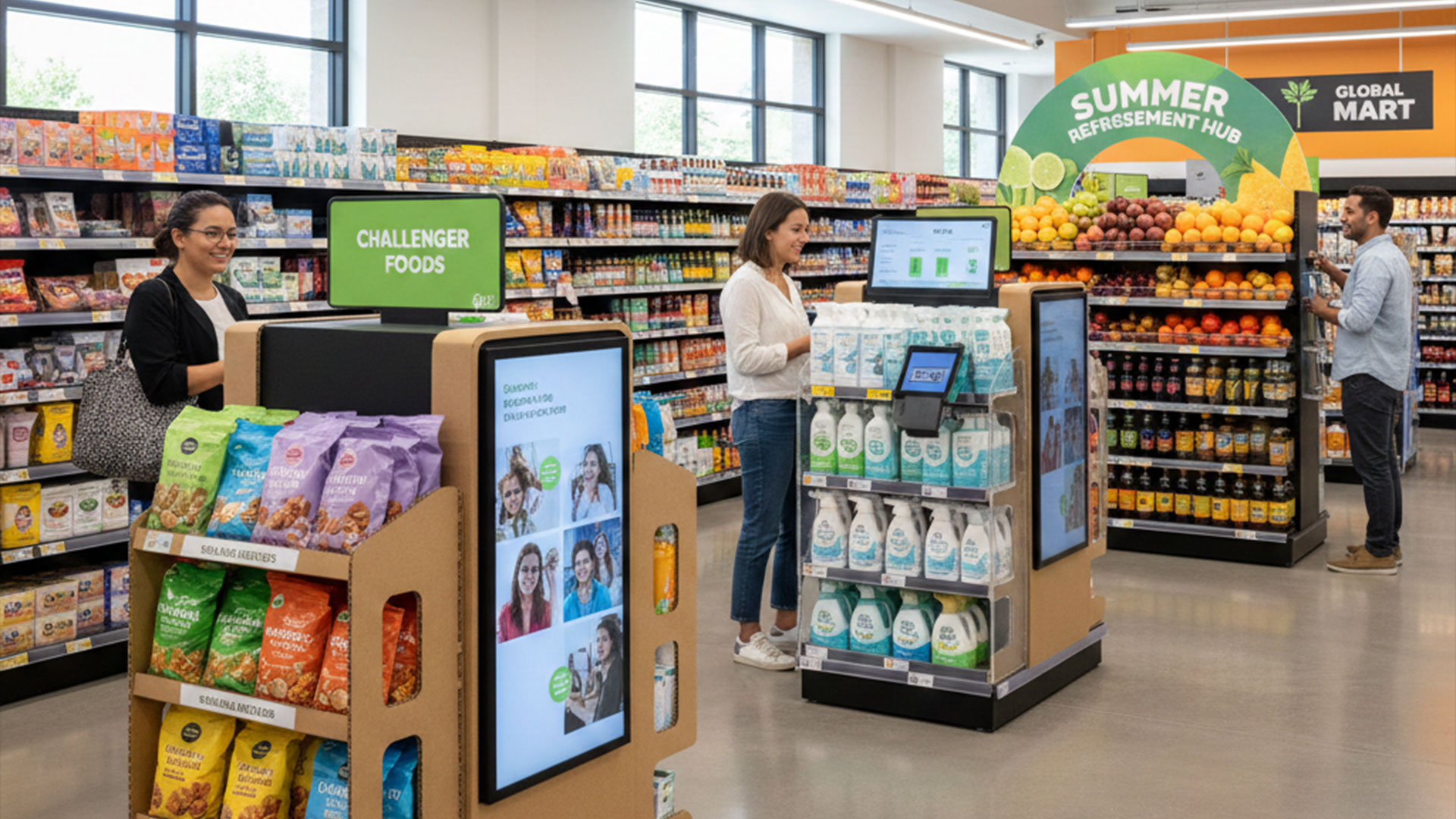
Clean store policies are tightening, in aisle fixtures are disappearing, and challenger brands are multiplying. Every inch of visibility now carries measurable impact, turning the floor into a high stakes arena for influence and conversion. But this is not a story about losing levers. It is a story about evolving them. The shelf is still sacred and endcaps still drive meaningful performance, but the brands that win the next phase of “Floor Wars” will treat visibility as a strategic system rather than a static placement. Three forces are defining the new rules of engagement.
With fewer physical touchpoints, brands need disruptive but retailer friendly solutions. Compact builds, modular visuals, and ideas that spark shopper pause without adding clutter give brands an edge on a constrained floor.
Retailers are prioritizing efficiency and expect evidence before making room for anything new. Brands that can quantify the incremental impact of features and displays in advance will gain leverage. Foot traffic, dwell time, and basket lift measured through past performance or predictive modeling can shift negotiations in your favor.
Visibility is now a shared challenge. Retailers and brands will increasingly co-design merchandising solutions that enhance the shopper experience and grow the category. The opportunity lies in proving why your brand should lead those programs.
Build compact, flexible, and instantly recognizable display systems that work within stricter store environments. Use predictive data to estimate display impact before pitching it. Bring retailers co-created solutions that solve category problems, not just brand problems. And treat visibility as an ecosystem that blends in store experience with digital signals.
The inches may be smaller, but the opportunities are not.